Showing posts with label Bus Wars. Show all posts

Monday, 7 February 2011

BUS WARS: Chapter 4: Price Wars

A price war is a phonomium that occurs in an oligopolistic market. In oligpopistic markets only a few firms dominate the market and according to game theory this leads to businesses to battle directly with one other. Unlike in a free market were firms struggle to influence the market each other (price taker), in a oligpoplistic market each firm has a direct impact on one another, if one business lowers its prices it can attract people to them and thus cut the revenue of their rivals.
A bus war is a brutal for of price war. In terms of the example above if one bus company lowers its prices to go from the city center to a village and another bus company that runs the same route does not then bus users are likely to switch from one bus service to another. A bus war is far more amplified than a price war as the businesses are pinned to a certain route pitched directly against each other.

In the mid 2000s Stagecoach's quest to increase its market share organically rather than taking over firms it created deadly bus wars across the country one such brutal war of economics was in the city of Preston. Preston was targeted by Stagecoach and the creation of Preston Citi was the 'army' they committed. Preston Citi was a re-branding to take Preston Buses advantage in identity with the city it would also give Preston Citi more freedom to compete with Preston Bus. In key areas across Preston, Preston Citi bus were launched in direct competition with Preston Bus. Preston Bus responded like wise.
Soon Preston Bus and Preston Citi Bus were running simultaneous in direct competition, both lowering their prices against each other. Preston Bus lowering its prices to force out Preston Citi and Preston Citi lowering its prices to drive out Preston Bus.
One of the critical battle grounds was Ashton, were bus tickets into Preston Centre were as low as 40p at one point, a stark contrasts to other routes were Preston Citi was charging well over £1.
It was not just price competition, Preston Citi also launched loyalty schemes such as day riders and mega riders which proved successful in capturing control of the market.
Price competition for Preston Bus was not stustationable, making losses per customers and looking market share they were in deep trouble. While Preston bus struggled, Preston Citi could make losses and be sustained by profits across the Stagecoach empire. Preston bus was making a anual turnover of around £11 million but compared to Stagecoaches £1.2 Billion. Preston Bus was owned by its employees with no where to go for funding or help. Preston bus was soon facing yearly loses and it Stagecoach now moved in for the kill...

Saturday, 15 January 2011

BUS WARS: Chapter 3: Attack of the Monopoly

Stagecoach is an example of a business that has expanded through external growth and successfully! Founded in wake of the deregulation of the 1980s just like Preston bus and the all the other small bus firms, yet Stagecoach would grow into one of the market leaders. In the UK Stagecoach would be come one of 5 oligopoists however locally Stagecoach would be one of the most aggressive monopolists in recent history.
Stagecoach entered the market as a completely new firm (yet previously dealing in minibus hire). At first Stagecoach offer bus hire, with a personal service then it quickly began  growth and the first firm to be bought out by Stagecoach was McLennan Of Spittalfield. This allowed Stagecoach to move from merely operating hire services out of their home of Perth (Scotland) into operating local services to Glasgow under the name Magicbus. 
This was the beginning of huge growth for Stagecoach, through out the late 1980s. Along with rivals Arriva, Stragecoach opted for an aggressive take over strategy. Stagecoach took over maybe bus services including: East Midlands, Cumberland, Southdown and Ribble.
Stagecoach took over Ribble bus in 1988 and instantly moved for dominance across the North West. 


Stagecoach renamed Ribble bus to Stagecoach Ribble and soon began buying up other bus local companies. Stagecoach took over Barrow Borough Transport and created Stagecoach Cumbria out of the Cumbrian bus services. The Northwest was just one if the regions Stagecoach targeted, it grew to dominance across various regions all across  the UK and even bought out bus operators globally buying up UTM in Malawi. 


By the 2000s Stagecoach and bough up many smaller bus companies and had strong market share across major cities such as Manchester, London, Newcastle and Liverpool. There 1990s diversification into the rail industried  captured a significant market share and expansion globally was large scale. In 2001 all of the Northwest bus groups were merged into the group Stagecoach North West but it was not until 2006 that the bus wars truly began.

In 2006 Stage coach formed Stagecoach Preston Citi, its goal: to directly compete with Preston Bus! 


Main sources:  Stagecoach Group: History, Wikipedia: Stagecoach Group, Stagecoach Northwest

Friday, 31 December 2010

BUS WARS: Chapter 2: The History of Preston Buses

Preston Bus  was founded in 1904 and ran as a publicly owned bus service for 89 years until in 1993 it was bough by its employees during 1993.
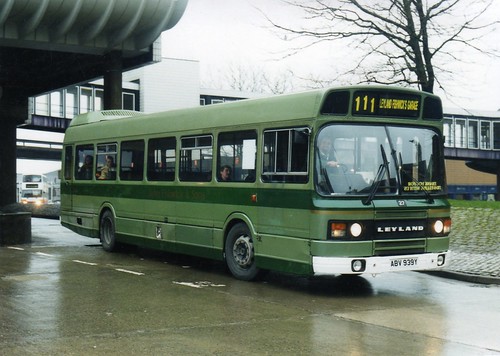
The bus's owned by the company operated under the City logo and with the City colours, as seen in the picture bellow. The firm operated many routes through out Preston along with other local bus companies.
A Preston Bus infront of iconic bus station 
© Copyright Tom Pennington and licensed for reuse under this Creative Commons Licence

Such companies like John Fishwick and Sons a bus company based in Leyland, as small local bus firm that rans buses around Leyland, Preston, Chorely and Wigan.
An old Fishwich bus running out of the bus station
There was also Ribble Motor Services, an other small transport firm that operated from the 1920s to the late 1980s. Ribble Motor Services covered many northwest bus routes and operated many out of Preston bus station.
A Ribble bus
These three firms and others created a healthy bus industry in Preston, economic theory dictates that their prices would have been competitive and service good. But in take look round the now declining Preston Bus station and you will not see a Ribble bus, the iconic colours of Preston bus are gone and Ribble Buses are rarer and rarer.
For there was a storm brewing, a new competitor was about to arrive and monopolise the North West laying waste to its competitors. The Stage Coach had arrived.

Chapter 1

Thursday, 30 December 2010

BUS WARS: Chapter 1: The city of Preston


Preston is a city with a strange affilation to buses! There have been in the past year many wars fought between companies, politicains, citizens and government bodies over the simple mater of buses. 
Preston is home to one of the worlds largest bus stations which has been the focal point of the 'tithebarn project' a plan to redevelope the city. The iconic Preston bus station is loved and hated by many and its disition to be torn down has caused much debate amoung citizens of Preston. 
http://www.leegarlandphotography.co.uk/

That is another tale which can be read here

Yet Preston Bus station has been the scene of an other war, a battle between a small local firm known as Preston Bus Plc and the national bus giant stage coach. What seemed at first a battle between two firms soon became a war of legislation and law as the Competition Competion fought with Stage Coach for the fate of Prestons bus services. 


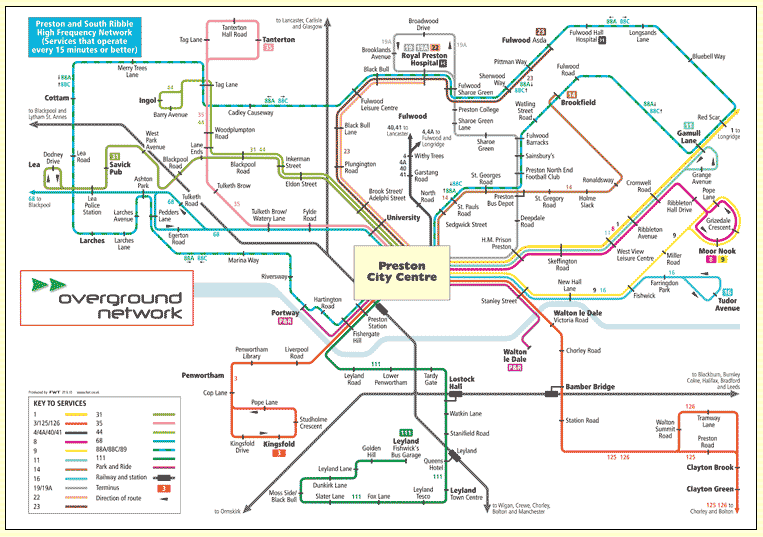
The routes covered by Preston Bus PLC